
Feb. 24, 2025
Gadolinium Aluminum Gallium Garnet (GAGG) crystals doped with Cerium (Ce) have emerged as a powerful material for improving the sensitivity of Positron Emission Tomography (PET) imaging. PET imaging is an essential diagnostic tool used in various medical fields, including oncology, cardiology, and neurology. The quality and accuracy of PET images depend significantly on the materials used in the detectors, and GAGG (Ce) crystals offer a host of benefits that enhance the overall performance of these imaging systems. In this article, we will explore how GAGG (Ce) crystals contribute to improving the sensitivity of PET imaging, making it a more effective tool for early disease detection and precise diagnosis.
One of the most important factors influencing the sensitivity of PET imaging systems is the scintillation efficiency of the crystal material used. Scintillation efficiency refers to how effectively a material converts gamma radiation or photon interactions into visible light, which can then be detected and converted into an electrical signal. GAGG (Ce) crystals exhibit excellent scintillation efficiency, meaning they produce a significant amount of light in response to incoming gamma rays from the patient’s body.
Increased Light Output: GAGG (Ce) crystals are highly efficient at converting gamma photons into visible light, which significantly improves the sensitivity of PET detectors. This allows the system to detect even low-energy gamma rays with high accuracy.
Improved Signal-to-Noise Ratio: The high scintillation efficiency of GAGG (Ce) crystals leads to clearer, stronger signals and improves the signal-to-noise ratio. This reduction in background noise results in more precise and accurate images.
The high light yield of GAGG (Ce) crystals enhances PET imaging sensitivity by enabling the detection of faint signals and providing more detailed and reliable data for diagnosis.

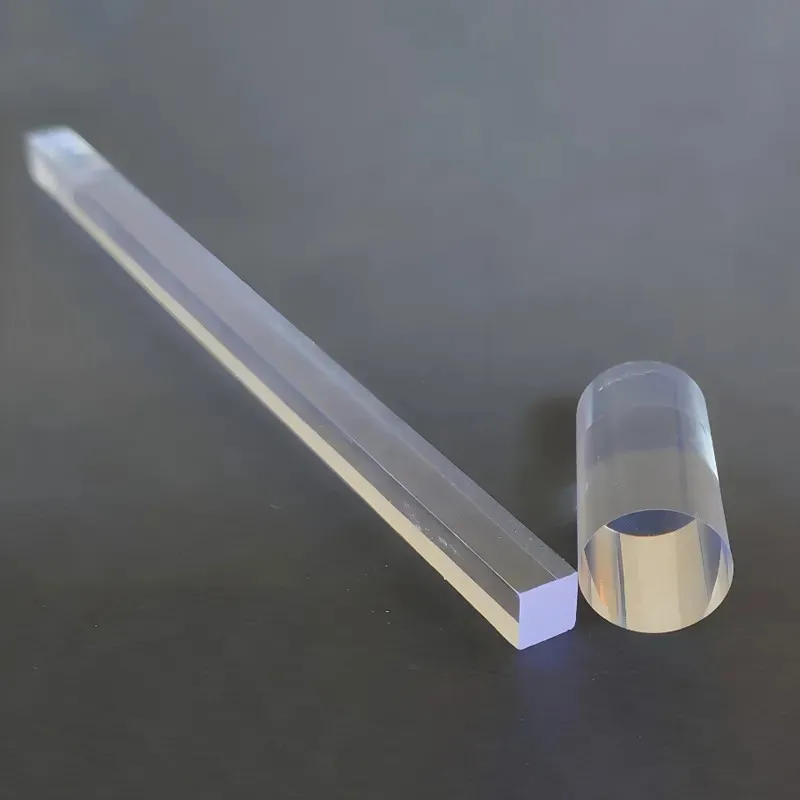
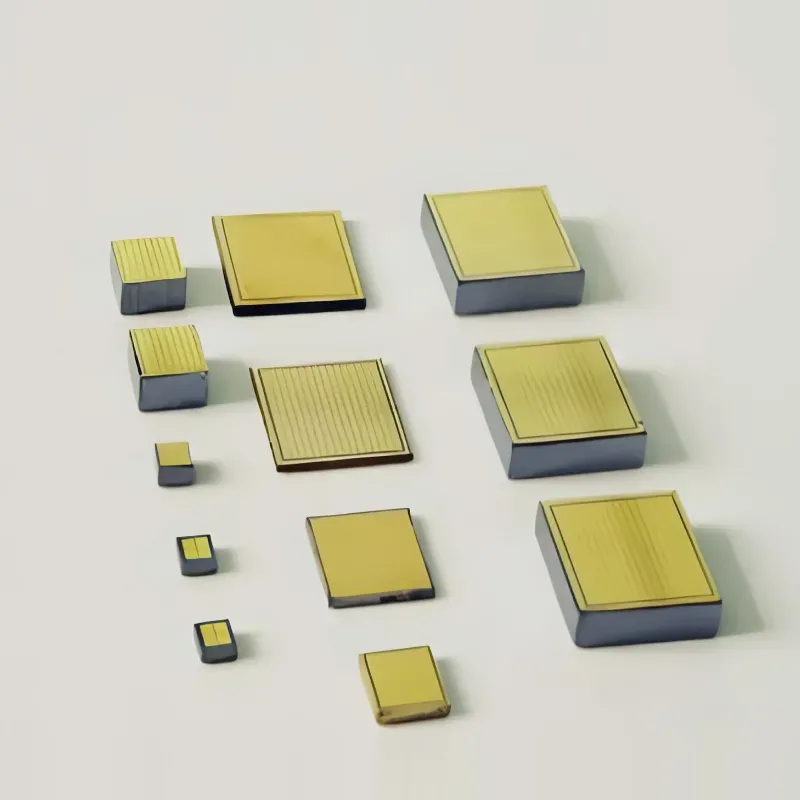
GAGG Scintillation Crystal Gadolinium Aluminum Gallium Garnet
The speed at which a scintillator material responds to incoming gamma radiation is critical in improving imaging sensitivity, particularly when capturing high-speed events or dynamic processes within the body. GAGG (Ce) crystals are known for their fast scintillation response time, typically on the order of a few nanoseconds. This rapid response time enables PET scanners to detect gamma photons quickly and accurately, improving the temporal resolution of the imaging system.
Reduced Motion Artifacts: PET scans often involve patients who may move slightly during the procedure. The fast response time of GAGG (Ce) crystals reduces the chances of motion artifacts blurring the images, ensuring clearer and more accurate representations of the area being scanned.
Real-Time Imaging: The fast decay time allows PET scanners to capture dynamic processes in real-time, such as metabolic activity or blood flow, without compromising on image clarity.
By improving the response time, GAGG (Ce) crystals enhance the overall sensitivity of PET imaging, enabling more precise detection of rapid biological processes and reducing image distortion from motion.
Energy resolution refers to the ability of a detector to distinguish between photons of different energies. In PET imaging, gamma rays emitted by radiotracers inside the body often have varying energies. GAGG (Ce) crystals provide excellent energy resolution, which is critical for distinguishing between these different energy levels with high precision.
More Accurate Energy Measurement: GAGG (Ce) crystals absorb the gamma radiation more efficiently, producing a precise amount of scintillation light based on the energy of the incoming photon. This helps PET scanners accurately determine the energy of the detected photons, leading to better image quality.
Better Background Rejection: The enhanced energy resolution of GAGG (Ce) crystals helps to reject background radiation and reduce the interference of unrelated signals. This improves the accuracy and clarity of the final PET image.
With improved energy resolution, GAGG (Ce) crystals enhance the sensitivity of PET imaging by enabling more accurate energy measurements, which leads to more reliable images and better diagnostic outcomes.
In PET imaging, the ability of a material to interact with gamma rays is influenced by its density and atomic number. GAGG (Ce) crystals have a high density and an atomic number that makes them excellent at absorbing gamma rays, which contributes to their high sensitivity in PET detectors. The combination of high density and a relatively high atomic number allows GAGG (Ce) crystals to interact more effectively with gamma radiation, increasing the likelihood of detecting low-intensity photons.
Improved Photon Detection: The high density and atomic number of GAGG (Ce) crystals result in better photon interaction, meaning that the detector can more efficiently capture photons emitted by the radiotracer in the body.
Enhanced Spatial Resolution: The increased interaction between gamma rays and the crystal allows for finer resolution, improving the overall spatial resolution of the PET scanner and providing more detailed images.
The high density and atomic number of GAGG (Ce) crystals allow PET scanners to detect gamma radiation more effectively, improving both the sensitivity and spatial resolution of the images produced.
One of the challenges of using scintillator materials in PET imaging is radiation damage. Continuous exposure to gamma radiation can degrade the performance of certain materials, reducing their sensitivity over time. GAGG (Ce) crystals exhibit excellent radiation hardness, meaning they are resistant to damage from prolonged exposure to gamma rays. This property ensures that GAGG (Ce) crystals maintain their scintillation efficiency over long periods, providing consistent performance in PET scanners.
Long-Term Reliability: The radiation hardness of GAGG (Ce) crystals ensures stable and reliable performance throughout the life of the PET scanner, leading to consistent image quality without degradation.
Reduced Need for Replacements: Due to their durability, GAGG (Ce) crystals require fewer replacements compared to other scintillator materials, reducing maintenance costs and improving the overall longevity of the imaging system.
The radiation resistance of GAGG (Ce) crystals contributes to the long-term stability of PET scanners, ensuring reliable and consistent performance without a drop in sensitivity over time.
Given their impressive scintillation efficiency, fast response times, and energy resolution, GAGG (Ce) crystals are particularly beneficial in high-resolution PET imaging systems. These systems are used to detect small tumors, identify early stages of disease, and monitor the effects of treatment with exceptional clarity. The enhanced sensitivity provided by GAGG (Ce) crystals allows for more detailed scans, which is crucial for early diagnosis and the accurate monitoring of disease progression.
Early Disease Detection: With higher sensitivity, GAGG (Ce) crystals allow PET scanners to detect smaller and more subtle lesions, which is critical for early-stage disease detection.
Improved Diagnostic Accuracy: The high sensitivity of GAGG (Ce) crystals ensures that PET imaging can provide more accurate results, helping clinicians make better-informed decisions regarding patient care.
By improving sensitivity, GAGG (Ce) crystals play a vital role in enhancing the accuracy of high-resolution PET imaging, making them essential for early diagnosis and precise monitoring of various medical conditions.
GAGG (Ce) crystals are a highly effective material for improving the sensitivity of PET imaging systems. With their high scintillation efficiency, fast response time, excellent energy resolution, high density, and radiation hardness, GAGG (Ce) crystals enhance the overall performance of PET scanners, providing clearer, more detailed images with higher accuracy. These advantages make GAGG (Ce) crystals an indispensable component in modern medical imaging, particularly in applications that require high resolution and sensitivity, such as early disease detection and cancer diagnosis. As PET imaging continues to evolve, GAGG (Ce) crystals will remain a critical technology for ensuring better diagnostic outcomes and improving patient care.
Latest News
Portable Radiation Detector Using GAGG Crystal
Portable radiation detectors are crucial for ensuring safety in various environments. They help protect us from harmful radiation exposure. The GAGG crystal is a key component in these detectors due to its unique properties.
LEARN MORE
GAGG Crystal Supplier Selection Guide
When it comes to sourcing high-quality GAGG Crystal, making an informed choice of suppliers is crucial to ensure your projects meet the required standards.
LEARN MORE
Best Scintillator Crystal for Small Animal PET
The best scintillator crystal for small animal PET is crucial for achieving accurate imaging. These crystals convert gamma rays into light, allowing us to visualize biological processes.
LEARN MORE
How SiPM Coupled LYSO Arrays Improve PET Detector Resolution
In the realm of medical imaging, particularly in Positron Emission Tomography (PET), users often face significant resolution challenges. Many radiologists and medical physicists experience frustration when their current detector systems fail to provide the high-resolution images necessary for accurate diagnosis. The adoption of LYSO (Lutetium Yttrium Oxyorthosilicate) crystals, coupled with SiPM
LEARN MORE
What Is LYSO Crystal? Properties and Applications Explained
The emergence of LYSO Crystal, a type of scintillation crystal material, has revolutionized various fields, particularly in medical imaging and radiation detection. Traditional materials such as NaI(Tl) have dominated the market for years with their efficiency. However, LYSO crystal offers numerous advantages—boasting significantly improved energ
LEARN MORE
Why LYSO Crystal Is Widely Used in TOF PET Systems
The realm of nuclear medicine detection has faced numerous challenges, particularly in accurately imaging and diagnosing conditions through Positron Emission Tomography (PET) systems. One significant pain point is the need for high sensitivity and resolution in imaging, which traditional systems often struggle to achieve. This is where LYSO (Lutetium Yttrium Oxyorthosilicate) crystal shines as a
LEARN MORE
LYSO vs BGO Crystal: Which Is Better for PET Imaging?
LYSO (Lutetium Yttrium Oxyorthosilicate) and BGO (Bismuth Germanate) crystals are both commonly used materials in positron emission tomography (PET) imaging. Their distinct properties influence the performance and quality of images produced during medical diagnostics.
LEARN MORE

The 2025 IEEE Nuclear Science Symposium, Medical Imaging Conference and International Symposium on Room-Temperature Semiconductor Detectors (2025 IEEE NSS MIC RTSD) will take place at Pacifico Yokohama Conference Center from 1 to 8 November 2025.
LEARN MORE

How Does GAGG (Ce) Crystal Improve PET Imaging Sensitivity?
Gadolinium Aluminum Gallium Garnet (GAGG) crystals doped with Cerium (Ce) have emerged as a powerful material for improving the sensitivity of Positron Emission Tomography (PET) imaging. PET imaging is an essential diagnostic tool used in various medical fields, including oncology, cardiology, and neurology.
LEARN MORE

How Do LYSO (CE) Crystals Improve Imaging Resolution?
LYSO (Lutetium Yttrium Oxyorthosilicate) crystals doped with Cerium (Ce) have become a cornerstone in the world of medical and scientific imaging, particularly in positron emission tomography (PET) and other advanced imaging systems.
LEARN MORE